
Active Listening Is the Game-Changer You’re Missing
Dec 09, 2025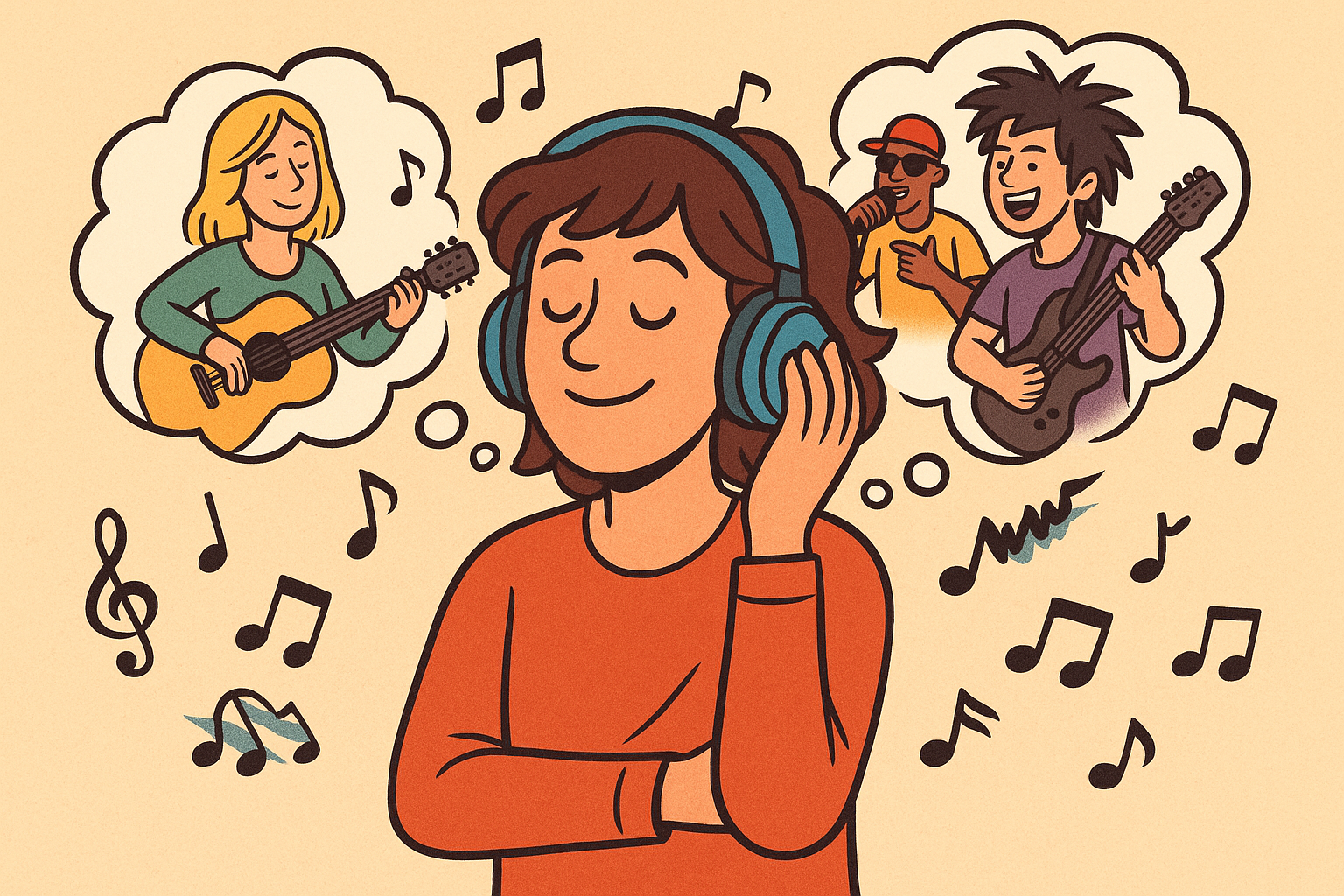 If you’re thinking, “Active listening doesn’t really matter” or “I’d rather figure songs out on my own,” let me stop you right here.
As a coach—and as someone who didn’t “get it” for a long time—I’m shouting from the rooftops: IT MATTERS.
If you don’t learn this, you’ll find yourself reinventing the wheel every time you sit down to write. Or worse, you’ll get stuck in the same old patterns again and again.
Why Active Listening Matters
When I started taking songwriting classes, no matter the subject—production, melody, sync—every teacher said the same thing: active listening.
They weren’t copying each other. These were experts in different fields. But they all knew: if you want to stand out, you have to listen differently.
Active listening is for every musician—whether you’re writing for yourself, for other artists, or for film and TV.
Comfort vs. Growth
Here’s the problem: we naturally seek out what makes us comfortable.
We listen to music we already like. We revisit the same bands or eras. Sometimes we even trick ourselves into thinking we’re exploring new things when we’re not.
But growth doesn’t come from comfort.
If you only listen to what reinforces your current tastes, you’ll never stretch beyond your habits. Your chords, rhythms, and melodies will stay the same.
Active listening breaks the cycle.
Filling Your Creative Well
Think of your creative well as a reservoir of ideas: hooks, riffs, chord progressions, melodies, and production techniques.
You can’t pull water from an empty well. And you can’t write fresh songs if you’re not filling your creative one.
How to start:
-
Use curated playlists on Spotify, Apple Music, or Amazon Music.
-
Explore genres and subgenres outside your comfort zone.
-
Listen to songs on repeat until you understand them inside and out.
Quick listens aren’t enough. Dive in. Absorb. Pay attention to nuance.
Mindset Shift
Some musicians resist new music. They say things like:
-
“Everything was better in [insert decade].”
-
“This new stuff is garbage.”
-
“I’m good where I am.”
But think about it like this: if a surgeon discovered a technique that guaranteed shorter, safer surgeries, would they stick with the old way? Of course not.
Songwriting isn’t life or death, but it’s still your craft. And if new methods or genres can help you grow, ignoring them only holds you back.
Learning From Others
Even legends borrow.
I once saw Pharrell tell Dave Grohl he was a great drummer. Dave laughed and said he was the “most basic drummer.” Then he admitted he borrowed his style from Tony Thompson, an iconic disco drummer.
They even played Nevermind next to a Gap Band track to prove the point. Years later, Grohl met Thompson and thanked him. Thompson simply said: “I know.”
That’s the thing: you can take from other genres and make it your own. Disco fueled grunge. Pop can fuel your folk. Hip-hop can fuel your rock.
Final Thoughts
Active listening isn’t optional—it’s the game-changer.
It keeps your music fresh. It fills your creative well. And it connects you to the patterns, nuances, and tricks that elevate songs from fine to unforgettable.
So stop just hearing music. Start listening actively.
Your songs—and your listeners—will thank you.
